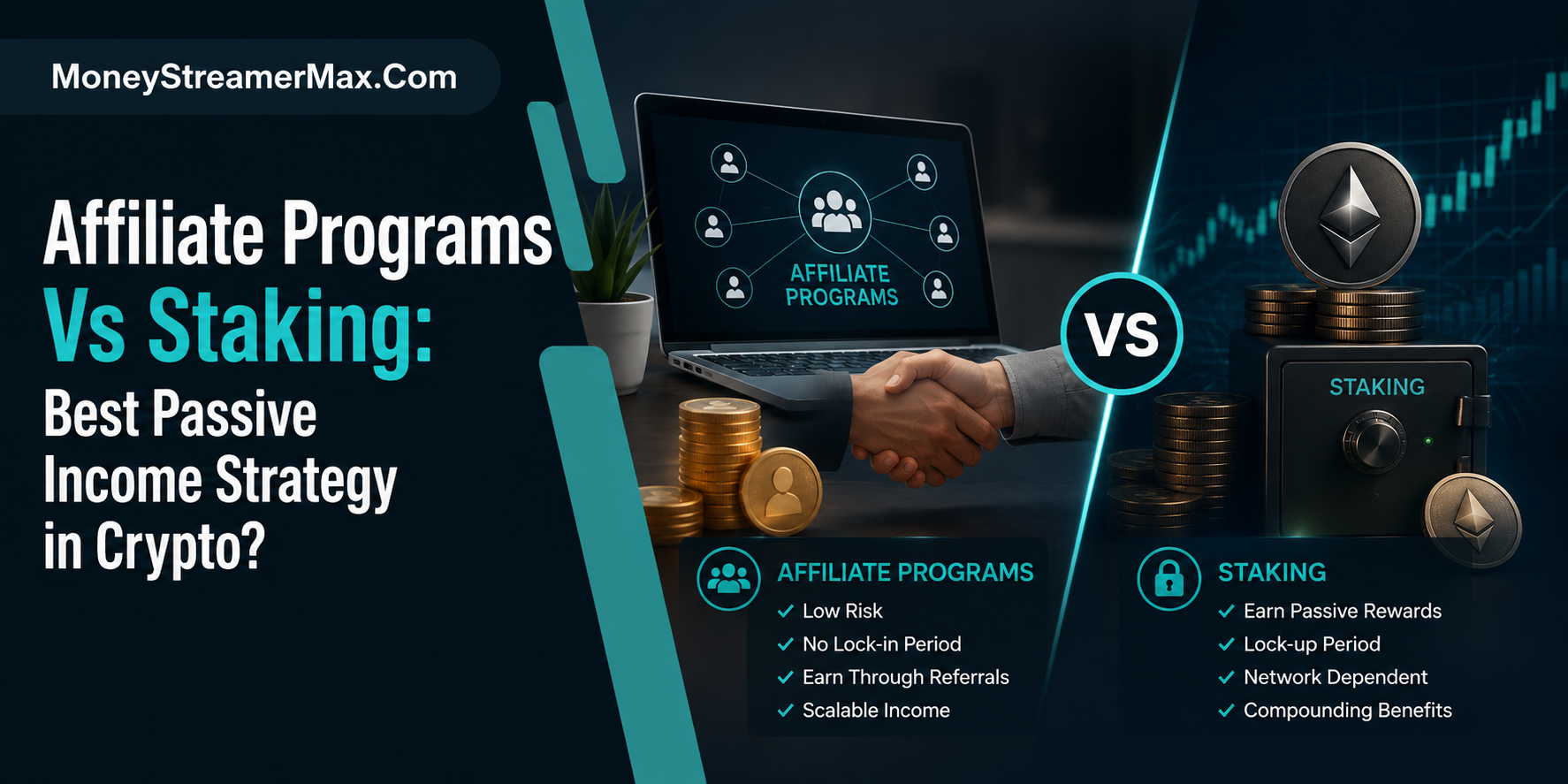
Affiliate Programs Vs Staking: Best Passive Income Strategy in Crypto?
As major cryptocurrencies have reached record highs this year, many people have started looking for passive income opportunities instead of active trading. This strategy allows them to grow their crypto holdings, even when the market moves slowly or remains stable. Because active trading can be risky, options such as staking and affiliate programs have become increasingly popular among investors and individual job seekers.
This blog will explore both methods to help you find the most effective ways to earn in crypto.
Understanding Crypto Staking
Crypto staking allows investors to lock their digital assets into a Proof-of-Stake (PoS) blockchain network. In return, they receive rewards in the form of additional tokens. There are three common ways to get started: solo staking, staking pools, and exchange staking. Solo staking offers higher rewards but requires technical knowledge and specialized hardware. Staking pools are easier for beginners, while exchange staking provides a simple one-click option.
Crypto Affiliate Program: A Brief Overview
Crypto affiliate programs let people earn income by referring new users to cryptocurrency platforms. Unlike staking, this method does not require a large investment. Most exchanges and wallet providers offer referral links that pay commissions when someone signs up or makes a purchase through your link.
Many people interested in crypto work from home opportunities choose affiliate programs because they require very little upfront investment.
Affiliate Programs Vs Staking: Key Differences
The debate surrounding Affiliate programs vs. staking often comes down to individual preferences. Both methods provide earning opportunities, but they work in very different ways. Let's discuss in detail:
1. Capital Required
Staking requires an initial investment because users must own cryptocurrency before they can begin staking. The amount needed varies according to the platform and the type of digital asset.
On the other hand, most affiliate programs require little or no money to get started. Instead of investing capital, users invest their time and effort to build an audience and attract referrals.
2. Effort Level
In staking, once the assets are locked into the network, very little daily effort is required. Investors can simply monitor their accounts and track their rewards.
On the contrary, affiliate marketing requires more time and dedication. Creating content, building trust, promoting products, and attracting new users are all essential parts of the process. However, the long-term earning potential can be significant.
3. Risk Level
Staking generally carries a low to medium level of risk. Investors can earn rewards by locking their digital assets on a blockchain network, but fluctuations in cryptocurrency prices may affect overall returns.
Conversely, affiliate marketing has a very low level of financial risk because there is usually no need to invest money. However, earnings can vary depending on market conditions, audience engagement, and the popularity of the products being promoted.
Which Strategy Is Right for You?
The right choice depends on your goals, budget, and level of risk. Affiliate programs are ideal for people who enjoy creating content and want a low-cost, flexible income source. Staking is better for long-term investors seeking a more passive way to earn rewards. Moreover, many combine both methods to diversify their income and create extra earning opportunities.
End Note
The debate between affiliate programs vs staking shows that there is no universal answer. Affiliate programs offer flexibility and lower financial barriers, while staking provides a more traditional investment approach.
If you need passive earning money from home, visit Moneystreamermax. Join our membership plan and earn in crypto.